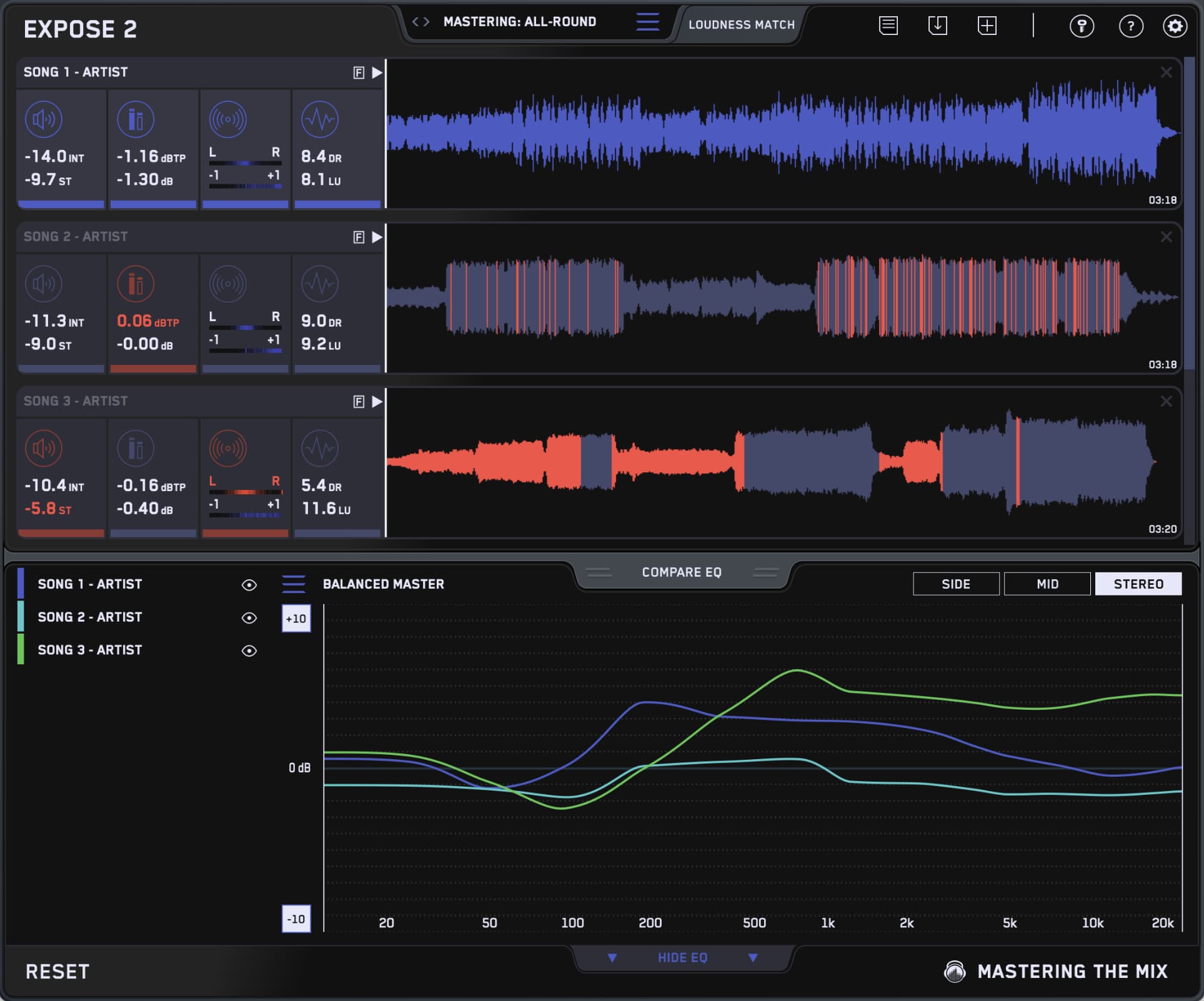
You've heard your song about a million times now so all subjectivity is lost. The best way to get some perspective on whether your mix actually sounds good or not is to bring in a few reference tracks to your project. These should be songs in a similar genre and vibe to your own track. If you have a down tempo country ballad don't reference against a high energy drum and bass track.
The questions you should be asking yourself when referencing…
Is my bass and treble at a similar level to this reference track?
Are my instruments balanced in a similar way?
Is my kick too soft?
Does my snare have enough body to it?
Do the vocals cut through the mix in a similar way?
Are the reverb levels similar to the reference track?
KEEP IT BALANCED…Don’t have super bright cymbals but very dull vocals
Playback systems
As amazing as your track might sound in your studio, It may sound completely different on other playback systems. Try listening to your music on as many systems as possible to make sure your mix translates well on all of them.
Near-field Monitors
Studio Headphones
Consumer Headphones
Car Stereo
CHEAP Kitchen Radio
CHEAP Ear Buds
Listening levels
The level at which you listen to your material will have an effect on your perception of frequency balance. the louder you listen, the louder the bass. The quieter you listen, the quieter the bass. Listen to your track at varying loudness levels to make sure the bass is present but not too loud and to hear when the high end is too harsh. The reference tracks you brought in to your project will help give you some perspective on what is a good bass level. 80-85dB is the level at which the human ear has the most linear response.
What is mono?
Mono is one single channel of audio. The left and right channels of your stereo mix are combined into one signal and sent individually to both of your speakers. A surprising amount of listeners will experience your track in mono. A lot of portable speakers are mono and all car FM radios automatically switch to mono when the signal is weak. Most nightclubs and venues also play music in mono.
How should I check my mix in mono?
In Logic, load up the Gain plugin on the master channel. Check the box below ‘Mono’ but be sure to uncheck this box when bouncing your audio. Listen and hear how your mix changes. Some instruments may be quieter or even disappear completely from you mix. This happens due to the sound waves being out of phase. Make sure you only listen in mono through one speaker. If you use two the bass will be hyped giving you a false balance of your mix. Use your reference tracks to achieve a good balance between your instruments whilst listening in mono.
Frequently Asked Questions
Why use reference tracks for critical listening?
After hearing your song countless times you lose all objectivity. Bringing reference tracks of a similar genre and vibe into your project restores perspective, letting you compare bass and treble levels, instrument balance, vocal presence and reverb against a known good mix.
Why check a mix on multiple playback systems?
A mix that sounds amazing in your studio can sound completely different elsewhere. Listening on near-field monitors, studio and consumer headphones, a car stereo, a cheap kitchen radio and earbuds confirms your mix translates well everywhere.
How does listening level affect mix decisions?
The louder you listen, the louder the bass seems, and the quieter you listen, the quieter it seems. Listening at varying levels keeps the bass present but not overpowering. Around 80 to 85dB is where the human ear has its most linear response.
Why check your mix in mono?
Many listeners hear music in mono through portable speakers, weak-signal car radios and club systems. Summing to mono reveals elements that get quieter or disappear due to phase issues. Monitor through a single speaker so the bass is not falsely hyped.