

On 12 August, Beatport confirmed it will refuse to sell fully or majority AI-generated music. It joins Traxsource, Bandcamp, Tidal, Deezer and Spotify, all of which have drawn a line of their own this year. If you make music yourself, this is the best news the industry has handed you in a long time.
But the coverage has been sloppy, and I've seen a lot of producers panicking about things that aren't happening. So here's what each platform has actually said, in their own words, and what it means if you use AI tools somewhere in your process.
Short version up front: not one of these policies penalises a human being who uses AI for mastering, stem separation or sound design. Every single one is aimed at fully generated tracks and fake artists. More detail on that below, including the bits that are genuinely vague.

1What Beatport Actually Said
Beatport expanded its existing partnership with Beatdapp, the streaming fraud company, to add AI detection at the point of ingestion. The policy itself is two sentences, and they're worth reading properly:
So it's a ban and a labelling system running together. Fully generated tracks never reach the store. AI-assisted tracks get through, but curators can see the tag.
CEO Matt Gralen framed it like this: "While new production techniques have driven electronic music forward since the beginning, there is a difference between a tool that assists human creation and a system that replaces it entirely. Beatport is built on the former."
That last line matters, and I'll come back to it.
A lot of headlines have run with "77% of Beatport users want fully human-made music." That's not what the survey found.
Beatport's actual numbers: 60% of users said they would not play AI-generated tracks in their sets, and of that 60%, 77% cited a preference for supporting human creators. Separately, 8% are currently open to playing AI music and 13% would consider it if artists and labels were fairly compensated. Beatport hasn't published the sample size, field dates or question wording, so treat it as directional rather than gospel.
2Everyone Else, In Order
Beatport wasn't first. Here's the whole picture as it stands today.
| Platform | Announced | What happens to fully AI tracks |
|---|---|---|
| Bandcamp | 13 Jan 2026 | Banned outright. No AI-assisted tier. Enforced by user reports, not detection software. |
| Traxsource | 23 Jun 2026 live 1 Jul |
Labelled "AI-Assisted", loses chart eligibility, may be removed. Repeat offenders lose their account. |
| Tidal | 29 Jun 2026 live 15 Jul |
No royalties paid. Icon shown to listeners. Fraud-linked tracks blocked or removed. |
| Deezer | Rolling since Jan 2025 | Tagged and cut from all algorithmic and editorial recommendations. Still streamable. Fraudulent streams stripped from the royalty pool. |
| Beatport | 12 Aug 2026 | Refused at ingestion. Never reaches the store. |
| Spotify | 11 Aug 2026 badges mid-Sep |
Fake artist identities get an "AI Persona" badge and are cut from editorial and algorithmic recommendations by default. |
| Apple Music | Mar 2026 | Voluntary disclosure tag only. No detection, no demotion. |
| SoundCloud | No AI-music policy | AI-assisted uploads allowed. Monetisation limited to approved AI partner tools. |
| YouTube | Platform-wide rules | Disclosure required for AI-generated music. Raw AI output with no human input fails monetisation. |
There's also an industry-wide standard now. On 10 July, the RIAA, IFPI and a long list of bodies including IMPALA, the Grammys and SAG-AFTRA published a voluntary two-tier labelling scheme: AI-Generated for recordings where generative AI made "the entirety or the primary portion of the creative elements", and AI-Assisted for recordings "created substantially by humans" where generative AI handled "some expressive elements".
It's voluntary and it only covers sound recordings, not lyrics, artwork or videos. But it gives every platform a shared vocabulary, which is why you're seeing the same two categories appear everywhere.
3The Question You're Actually Asking
I've had this question a few times now, so let's deal with it directly.
No. Not on any of these platforms, today. And this isn't me reading between the lines, they've each said so in writing.
- Spotify: "This badge is about the artist's public identity, not about how the music was made." Production method is handled separately through optional AI Credits, which are per-role and carry no penalty.
- Tidal: "artists should have the freedom to create with AI tools, and listeners should have the autonomy to choose the type of content they consume." Their policy is explicitly scoped to text-prompted generation, not production processing.
- Traxsource: AI used for sound design, vocal processing, mastering or creative experimentation stays on sale. The line is "music created entirely through AI prompting where no meaningful human creative contribution exists".
- Beatport: AI-assisted is permitted where the finished track is majority human-created.
- YouTube: explicitly exempts audio repair, upscaling and cloning your own voice from disclosure requirements.
- RIAA/IFPI: the AI-Assisted tier is a descriptive label. There is no penalty attached to it.
The thing being punished is generating a track from a prompt and putting your name on it. That's it. Nobody has come after the producer who ran a splitter to pull a vocal out of an old bounce.
Keep your project files. Traxsource's appeals process specifically names production session files as evidence of human creative contribution. If you ever get mislabelled, that folder is your defence. It costs you nothing to be able to prove you made the thing.
4Where The Rules Are Genuinely Vague
I'd be doing you a disservice if I made this sound tidier than it is. Three real problems.
Nobody has defined "majority" or "substantially". Beatport says majority human-created. Bandcamp bans anything "generated wholly or in substantial part by AI". The RIAA says "primary portion". None of them explain how that gets measured. If you build a track around a generated vocal and then write, arrange, mix and master everything else yourself, you're in genuinely untested territory.
Detection is automated and imperfect. Deezer's detector claims 99.8% accuracy, which sounds excellent until you remember it's running on tens of thousands of tracks a day and nobody publishes a false positive rate. Beatport and Traxsource use different vendors again. Three platforms, three detection systems, no shared standard.
Bandcamp has no detection at all, and that's arguably worse. Their policy runs on user reports and internal review, and they reserve the right to remove music "on suspicion of being AI-generated". In February, Side-Line reported artists having entire catalogues and accounts deleted on suspicion alone. In at least one case the trigger appears to have been AI-looking cover art and a fast release schedule, with no claim about the music itself. There's no documented appeals process.
If you release a lot of music quickly, or you use AI image tools for your artwork, you are more likely to get flagged than someone who doesn't. That's not a rule anyone wrote down. It's just how suspicion-based enforcement behaves. Worth knowing before it happens to you.
5Why This Is Good For You
Here's the part I find genuinely encouraging.
Deezer reported in July that AI-generated tracks now make up more than half of everything uploaded to their platform daily, peaking around 90,000 tracks a day in June. And AI music accounts for somewhere between 1% and 3% of actual streams.
That gap is the whole story. The bottleneck in music was never the ability to produce audio. It was somebody wanting to hear it.
I wrote a longer piece for We Rave You in July about where I think this all lands, and the short version is that AI music is becoming its own market tier rather than replacing the existing one. Cheaper and infinite has never been the same thing as valuable. What these platform policies are doing is making that separation visible and official, which protects the value of the thing you're actually making.
Worth being honest about the sourcing, though. Most of the widely-quoted consumer stats on this come from a single Deezer and Ipsos survey published in November 2025, covering 9,000 adults across eight countries. That's where "97% of listeners couldn't tell AI from human music in a blind test" comes from, along with 80% wanting AI music labelled and 52% saying it shouldn't chart alongside human work. It's a solid survey, but it's one survey, commissioned by a company that sells AI detection software. Useful, not scripture.
6Where Tools Like Ours Sit
Fair question, and I'd rather answer it than dodge it.
We haven't put generative AI into anything we make. That's a deliberate choice, not a gap in the roadmap. We've leaned hard into smart algorithms that do real analysis and heavy lifting, while keeping you in the driver's seat.
The distinction I keep coming back to is this one:
The first kind makes you a better producer over time. The second kind quietly cuts you out of your own track.

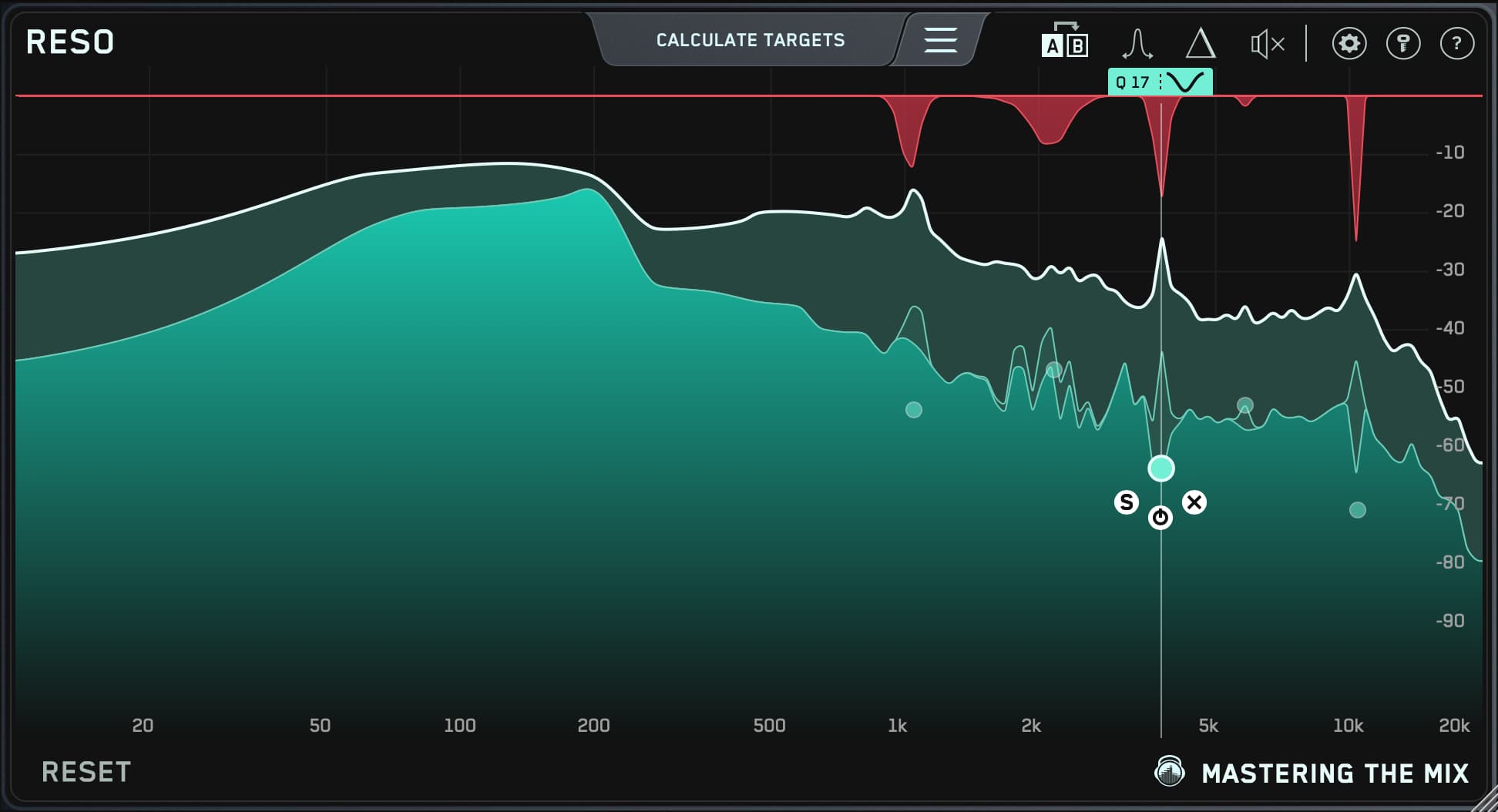
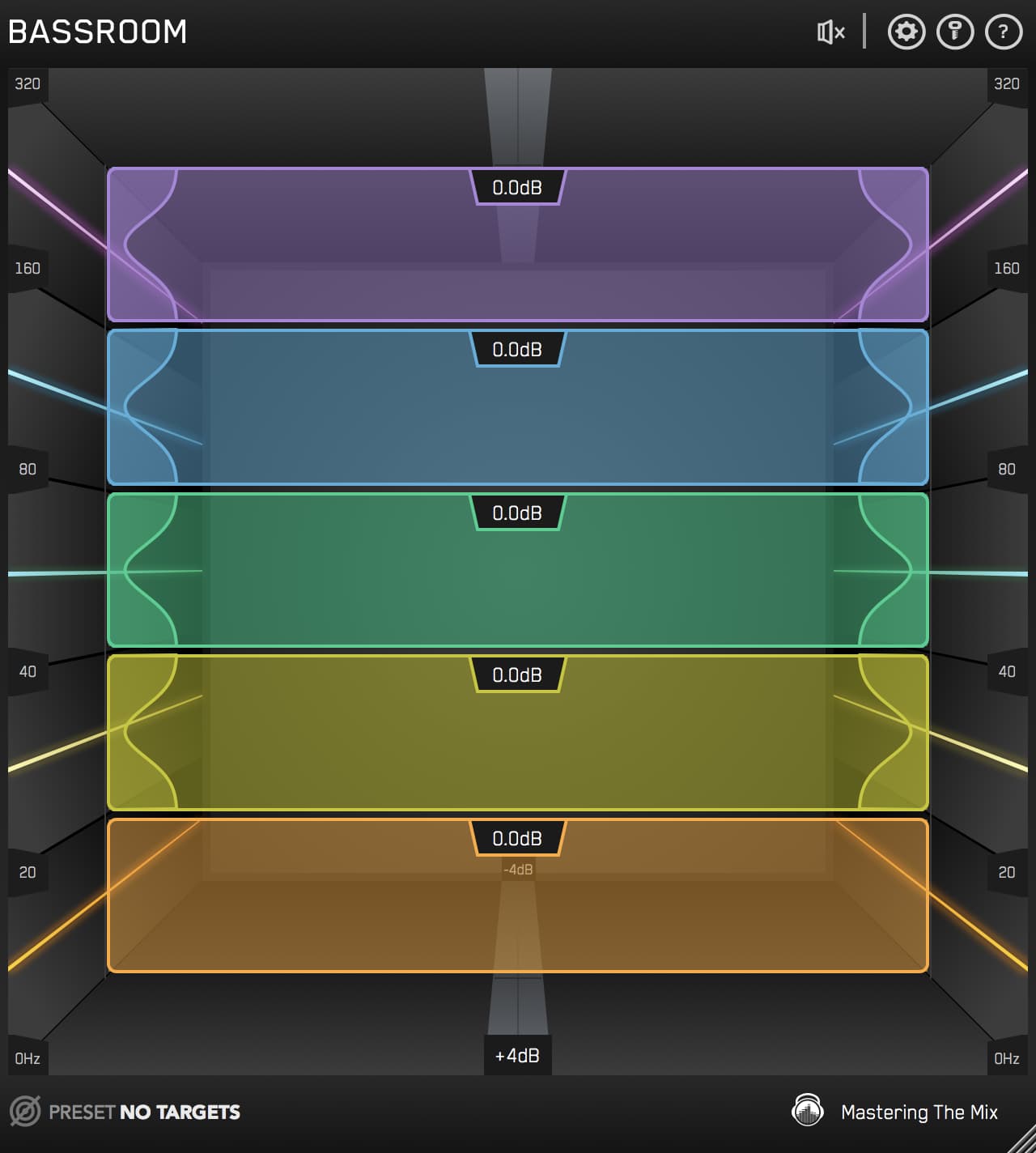
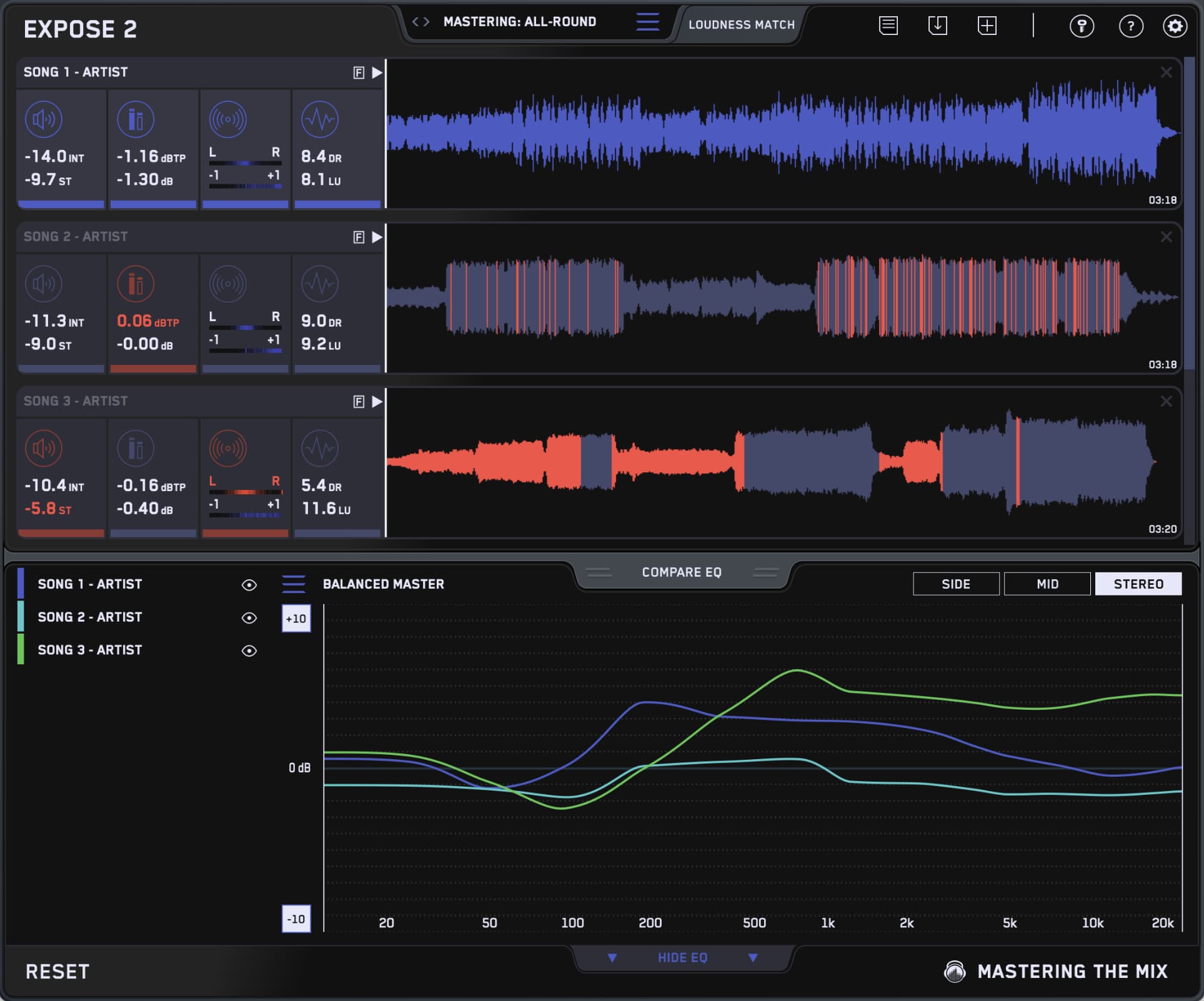
Take FASTER MASTER. It analyses your mix and gives you ten mastering starting points with different tonal characters. It does not decide anything. You audition them, you pick the one that suits the song, and then every parameter is yours to move: EQ, compression, saturation, limiting. There's a level-matched A/B against your unprocessed mix so loudness can't trick you into thinking something's better than it is.
It's doing the boring part fast. The taste is still yours.

Same principle in MIXVAULT. Run ANALYZE and you get a Smart Preset tailored to your actual audio as a starting point, then you shape it by hand with level-matched monitoring underneath so the comparison stays honest. Analysis, then your decision. Not a prompt and a result.

Analysis Tools
Measure your audio, show you what's there, suggest a starting point. You stay responsible for every decision.
You end up with:- A track you can explain
- Skills that transfer to the next one
- No disclosure questions to answer
Prompt Tools
Produce finished musical content from a description. The creative decisions happen inside the model.
You end up with:- Audio you didn't shape
- Labelling obligations on most platforms
- A ban on Beatport and Bandcamp if it's the majority of the track
I'm not claiming there's no grey area. Something that generates a bassline from a prompt is generative even if you EQ it afterwards. But a plugin that measures your track and shows you the result is not the thing any of these policies were written to stop, and no platform treats it that way.
7What To Actually Do About Any Of This
Not much, honestly, if you're already making your own music. But a few things are worth doing while the rules bed in.
- Keep project files for anything you release. They're your evidence if a label ever gets applied wrongly.
- Disclose generative AI use properly through your distributor if you've used it. Spotify's AI Credits are per-role and carry no penalty, and voluntary disclosure looks a lot better than being detected.
- Check what your distributor supports. The RIAA and IFPI scheme is new and not every distributor has plumbed it in yet.
- If you use AI artwork, be aware it makes you more visible to suspicion-based enforcement, particularly on Bandcamp.
- Don't let any of this change how you make records. The policies are aimed at people doing something you aren't doing.

The Value Is Moving Back Where It Belongs
Bandcamp went first in January. Seven months later the biggest dance music store won't sell fully generated tracks, Tidal won't pay royalties on them, Deezer won't recommend them, and Spotify is about to put a badge on artists who don't exist.
The industry has decided that a human being making the decisions is worth protecting. That's a good outcome, and it happened faster than most people expected.
None of it asks anything of you except that you keep doing what you're doing.
Make the music yourself. Not because a machine can't, but because you can.
Explore FASTER MASTER →Frequently Asked Questions
Has Beatport banned AI music?
Partly. Beatport announced on 12 August 2026 that fully or majority AI-generated music is not permitted and will be withheld at ingestion, with rightsholders notified directly. AI-assisted tracks are still permitted as long as the finished track is majority human-created, and those are tagged at the point of ingestion. Detection runs through an expanded partnership with Beatdapp.
Will I be penalised for using AI mastering or AI stem separation?
No. No major platform currently penalises a human artist for using AI in production. Spotify states its AI Persona badge is about artist identity, not how the music was made. Tidal says artists should have the freedom to create with AI tools and scopes its policy to text-prompted generation. Traxsource permits AI for sound design, vocal processing and mastering. YouTube exempts audio repair and cloning your own voice from disclosure.
Which platforms have AI music policies in 2026?
Bandcamp banned AI music outright on 13 January 2026. Traxsource began labelling every release Human-Made or AI-Assisted from 1 July 2026. Tidal stopped paying royalties on wholly AI-generated music from 15 July 2026. Deezer tags AI tracks and excludes them from recommendations. Spotify announced its AI Persona badge on 11 August 2026, rolling out mid-September. Beatport announced its ban on 12 August 2026. Apple Music offers voluntary disclosure tags only.
How much of the music uploaded to streaming platforms is AI-generated?
Deezer reported in July 2026 that AI-generated tracks make up more than half of everything uploaded to its platform daily, peaking at around 90,000 tracks a day in June 2026. Deezer also reports that AI music accounts for only 1 to 3 percent of actual streams. These figures come from Deezer alone and no other platform publishes comparable numbers.
What is the difference between AI-Generated and AI-Assisted music?
Under the voluntary labelling scheme published by the RIAA and IFPI on 10 July 2026, AI-Generated means generative AI produced the entirety or the primary portion of the creative elements of a recording. AI-Assisted means the recording was created substantially by humans and expresses human creativity, with generative AI used for some expressive elements. The scheme covers sound recordings only, not lyrics, artwork or videos.